
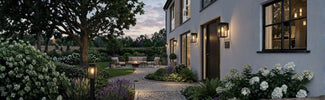
Where to install garden lighting: Tips and advice
, 9 min reading time
, 9 min reading time
#VALUE!
Effective garden lighting enhances not only the appearance of your outdoor space, but also its safety and usability. The right lighting ensures pathways are clearly visible, creates a pleasant atmosphere on your patio, and highlights features such as trees, plants, or walls. However, problems often arise when lights are installed without a clear plan.
In this article, you will learn where to position garden lighting, how to create a lighting plan, which mistakes to avoid, and how to achieve an outdoor space that is both practical and inviting.
The best placement for garden lighting depends on your goal. Do you want to improve safety, create ambiance, enhance orientation, or highlight features? Each area of the garden requires a different approach.
Paths and driveways are mainly lit for safe walking and driving. Place lights low along the edges so the route is clearly visible without causing glare. Bright lighting is not necessary here; soft, even illumination works better.
On a patio, lighting is primarily about comfort and atmosphere. Use warm light and avoid fixtures that shine directly into your eyes. Wall lights, standing garden lamps, or indirect lighting under a canopy are suitable choices.
Trees and plants can be beautifully highlighted with spotlights. Position lights low to the ground and aim them upward to create depth and height. Use this sparingly: one well-placed spotlight often has more impact than multiple bright lights.
Steps and changes in height should always be clearly visible. Place lighting on the side or under the edge of a step. This helps prevent tripping hazards without overpowering the space.
Facades and walls can serve as background lighting. Wall lights or uplights add structure and make the garden appear larger. This works especially well with long walls, darker corners, or a patio near the house.
Water requires careful lighting. Position lights so the water is subtly highlighted without causing reflections or glare. Always use lighting that is suitable for outdoor and damp environments.
| Garden zone | Best placement | Purpose | Recommended lighting |
|---|---|---|---|
| Pathway | Low along the edge | Safe walking and orientation | Soft, even light |
| Patio | Wall, pergola, or indirect | Atmosphere and comfort | Warm, indirect light |
| Trees and borders | Spotlight from ground | Accent and depth | Focused accent lighting |
| Steps | Side or under edge | Safety | Low, functional light |
| Facade or wall | Wall light or uplight | Structure and spatial effect | Uplight or wall lighting |
The right placement starts with how you use your garden. Where do you walk most often? Where do you sit in the evening? Which areas should stand out, and which can remain darker?
A common mistake is trying to illuminate the entire garden evenly. This makes the space look flat and less inviting. Contrast creates depth and visual interest.
A lighting plan helps you position garden lighting logically and efficiently. A simple sketch of your garden is often sufficient.
| Lighting type | Use | Placement |
|---|---|---|
| Base lighting | General visibility | Paths, entrances, driveways |
| Ambient lighting | Warmth and comfort | Patio, seating area, veranda |
| Accent lighting | Highlighting features | Trees, plants, walls |
| Safety lighting | Reducing risks | Steps, level changes, dark areas |
Installation depends on the type of lighting. Solar lights are easy to place, while fixed lighting with cables requires more preparation. Safety is always important with electrical installations.
If you are working with mains electricity or unsure about connections, consider using a professional. Low-voltage systems are often a practical and safe solution.
Garden lighting is exposed to weather conditions year-round, including rain, dust, leaves, and temperature changes. Regular maintenance prevents issues and keeps lighting effective.
Proper maintenance keeps your garden looking its best and extends the lifespan of your lighting.
Effective garden lighting is not about using as much light as possible, but about placing the right light in the right position. Doika helps you choose based on application, safety, and atmosphere, so your lighting looks great and works efficiently.
Start with functional areas such as paths, steps, entrances, and driveways. Then add atmosphere around seating areas and highlight features like trees or walls.
This depends on the type of light and the desired brightness. Even spacing works well along paths, but avoid placing lights too close together.
Warm, indirect lighting is best for patios. Wall lights, covered spotlights, or soft ambient lighting provide comfort without glare.
No. You can choose between solar lighting, low-voltage systems, or mains-powered lighting. Solar is easy to install, while wired systems are more reliable for long-term use.
For general use, at least IP44 is recommended for protection against splashing water. For areas exposed to rain or moisture, IP65 or higher is advisable.
Doika offers a carefully selected range of outdoor lighting for gardens, patios, driveways, and facades. The collection is chosen for durability, ease of use, and suitability for outdoor conditions. You benefit from clear product information, reliable service, warranty on your purchase, and support in selecting the right lighting for your needs.
Garden lighting works best when placed where safety, atmosphere, and functionality come together. Start with paths, steps, and entrances, then add ambient lighting around the patio and use accent lighting only where it adds value. With a well-planned approach, you avoid over-lighting and create a garden that feels comfortable even in the evening. Explore the range via outdoor lighting and choose lighting that suits your outdoor space.


