
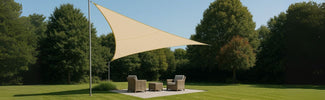
What to Look for When Buying a Shade Sail
, 8 min reading time
, 8 min reading time
A well-chosen shade sail transforms your outdoor space into a stylish, comfortable and sun-safe spot. Whether you're looking for cooling on the patio, shelter above a play area, or an eye-catcher for the garden, the range is wide and the choice requires attention. In this guide, we discuss what to look for when buying a shade sail: from material and shape to mounting and durability. This way, you'll choose a sail that lasts for years and fits exactly with your outdoor needs.
A shade sail is a tensioned fabric that offers protection against sun, UV radiation and prying eyes, which you attach above a patio, play area or other outdoor space. Shade sails come in various materials, shapes and sizes, from compact triangular sails to large rectangular constructions for an entire patio. The right choice depends on the purpose: sun protection, privacy or aesthetics.
Before making a choice, it's important to be clear on exactly what you want to achieve with the sail. The three most common purposes are:
Depending on your purpose, you'll choose a different type of sail, material and colour scheme. A sail with a high UV filter is essential for effective sun protection, while a densely woven sail offers more privacy.
Shade sails are available in various shapes, each with their own advantages. The right choice depends on the available space, desired shaded zone and intended design.
Also pay attention to the dimensions: a sail that's too small offers insufficient coverage, while a sail that's too large is harder to tension. Therefore, measure the available space accurately and determine where the mounting points can go.
The material of a shade sail affects its lifespan, user experience and maintenance. For long-term outdoor use and maximum protection, it's best to choose an HDPE shade sail with reinforced edges and UV-resistant coating.
| Material | Properties | Maintenance | Best for |
|---|---|---|---|
| HDPE | Air- and water-permeable, mould-resistant, up to 95% UV protection | Low maintenance | Long-term outdoor use, windy locations |
| Polyester | Often waterproof, sleek appearance | Moderate | Short-term or seasonal use |
| Cotton | Natural, warm look | More maintenance required | Decorative use, less weather exposure |
UV radiation can be harmful to the skin. Therefore, always choose a sail with a high UPF value (Ultraviolet Protection Factor). The best shade sails offer UPF 50+, which equates to more than 98% protection against UV radiation. This is especially important if you have children or spend a lot of time under the sail.
There are two main types of shade sails: water-permeable and waterproof.
If you live in an area with a lot of rainfall, a waterproof sail is useful. If you're mainly looking for cooling in summer, a breathable sail is often more comfortable.
Correct mounting is crucial for the durability and safety of your shade sail. Pay attention to the following points:
For permanent installations, it's advisable to have posts or wall brackets installed professionally.
Shade sails take a beating from wind and rain. Therefore, choose reinforced corners, double-stitched seams and UV-resistant materials. Do you live in a windy region? Then an air- and water-permeable sail is the safest choice. Always temporarily remove the sail during stormy weather if possible.
Colour affects both appearance and comfort:
Choose a colour that matches your garden design or facade. Also consider maintenance: lighter colours show dirt more quickly.
Proper maintenance significantly extends the lifespan of your shade sail.
Good-quality shade sails easily last five to ten years with proper maintenance.
Standard sizes are more affordable and immediately available. Do you need a specific size or have an unusual installation situation? Then choose a custom shade sail. This gives you complete freedom in shape, size and colour.
HDPE is generally the most durable, as it's air- and water-permeable, remains mould-resistant, and offers up to 95% UV protection for long-term outdoor use.
A UPF value of 50+ is recommended, which equates to more than 98% protection against UV radiation, especially important if you have children or spend a lot of time under the sail.
That depends on your climate: a waterproof sail is useful in rainy areas, while a water-permeable (HDPE) sail is more resistant to wind and offers more cooling in summer.
Ensure sufficient tension in each corner with quality mounting materials such as stainless steel hooks and turnbuckles, and install the sail with a slight slope of at least 20 degrees.
Good-quality shade sails easily last five to ten years with proper maintenance, provided they are cleaned properly and stored frost-free.
At Doika you'll find an extensive range of shade sails in various materials, shapes and sizes, suitable for sun protection, privacy or pure aesthetics. Customers rate Doika 4,3/5 on Trustpilot, and you benefit from free delivery from €40, clear product information, and reliable warranty and return conditions with every purchase.
Buying a shade sail requires vision and preparation. Pay close attention to material, shape, UV protection and mounting, so the sail lasts for years and fits your outdoor needs. Ready to choose? Discover our range of shade sails at Doika and find the perfect solution for your garden or patio.


