
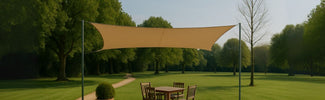
How Much Wind Can a Shade Sail Withstand?
, 4 min reading time
, 4 min reading time
A shade sail is perfect for providing sun protection, privacy, and style in your garden. But how does it hold up in strong winds? Many people underestimate the force wind can exert on a tightly stretched fabric surface. In this guide, you’ll learn exactly how much wind a shade sail can handle, which materials and shapes work best in windy conditions, and how to prevent damage with the right installation. Want to choose a sturdy, wind-resistant model right away? Check out our selection of shade sails with high wind tolerance.
Wind load refers to the force that wind exerts on an object. For shade sails, it works much like a sail on a boat: the surface catches the wind and transfers pressure to the attachment points. Without strong fixtures, this can lead to tearing, detachment, or even dangerous situations. With proper installation, shade sails can typically withstand winds of 20–50 km/h (Beaufort 4 to 6). For winds of Beaufort 7 or higher (storm force), it’s strongly advised to take the sail down.
Not all materials react the same way to wind pressure. For windy locations, the best choices are:
For coastal areas, open fields, or generally windy regions, HDPE is by far the safest option.
The shape of the sail directly affects its wind resistance. General guidelines:
Avoid oversized sails in open areas unless you use multiple fixing points and professional-grade materials.
How much wind your sail can handle depends as much on its installation as on the material. Key factors:
Avoid rope, nylon hooks, or flimsy wooden stakes — they can’t handle the pressure of strong gusts.
Wind damage often develops gradually. Watch for these signs:
If you notice these, take the sail down, repair as needed, and check all fittings before reinstalling.
It’s safer to take your shade sail down temporarily in these conditions:
Shade sails with carabiners are easy to remove and reinstall, helping you avoid damage and extend their lifespan.
Yes, but only under the right conditions. For a permanent setup, you’ll need:
Even then, it’s wise to take the sail down during extreme weather events.
A shade sail can easily handle normal winds if you choose breathable material, use professional fittings, and install it correctly. In most cases, winds up to 50 km/h (Beaufort 6) are fine. In storms or gusty conditions, temporary removal is the safest choice. This way, you maintain both the quality and safety of your outdoor space.
Ready to choose a storm-resistant shade sail that can truly stand up to the elements? Explore our range of wind-resistant shade sails and confidently select the one that’s perfect for your space.


