Best Outdoor Animal Enclosures for 2026: Top Picks, Comparison & Advice
,
13 min reading time
A high-quality animal enclosure (also called an animal shelter or outdoor animal enclosure) is one of the easiest ways to keep animals safe, dry, and comfortable—without turning daily care into a hassle. The best enclosure fits the animal (space + safety), your available area, and your routine: easy cleaning, practical feeding access, and a sturdy build that lasts for years.
In this guide, you’ll learn which wooden animal enclosure suits your setup, when an enclosure kit is the smart choice, and when a custom-built animal enclosure makes more sense. You’ll also get five concrete top picks from the Doika range, a comparison table, and practical buying tips to help you avoid common mistakes.
What is an animal enclosure?
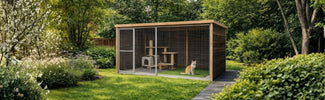
An animal enclosure is a protected living space designed for animals to sleep, rest, shelter, and—when used outdoors—spend time outside safely. Think of a rabbit hutch with a run, an aviary with an inner shelter, or an outdoor dog house. A good outdoor animal enclosure helps block rain and cold, provides ventilation, and reduces stress from wind, dampness, and sudden external stimuli.
Pros and cons of outdoor animal enclosures
Pros
Comfort & protection: A dry inner area reduces drafts, dampness, and cold exposure.
Better safety: Solid doors and latches reduce escape risk and improve control during care.
Smoother daily routine: Feeding, checks, and cleaning happen in one organized place.
Year-round usability: Roofed sections help keep activity areas drier in all seasons.
Cons
Requires space: Enclosures with runs or flight areas need enough room to be useful.
The base matters: Soft or uneven ground can cause doors/panels to shift and jam over time.
Harder to move: Larger enclosures are heavier and may require help to place or reposition.
Best 5 outdoor animal enclosures in 2026
1) Rabbit Hutch Jop 243 x 95 x 124 cm – best all-round rabbit setup
If you want a durable wooden animal enclosure that’s practical day-to-day, this rabbit hutch with covered run is built for two rabbits and comes as an easy-to-assemble kit. The raised sleeping area features a Betonplex floor panel, helping reduce ground moisture and cold drafts.
2) Rabbit Hutch Lyla 243 x 95 x 148 cm – premium look with a playful pointed roof
This model is for anyone who wants style and comfort in one. The pointed roof with roofing felt helps keep the run noticeably drier, even during heavy rain. The sleeping area is spacious, with room for a litter tray and multiple hiding/resting options.
Type: Large rabbit hutch with run
Roof: Pointed roof with strong roofing felt (drier activity space in all seasons)
Material: Impregnated wood + Betonplex floor in the sleeping area
Access: Door to the sleeping area + door to the run
Best for: A “looks great outdoors” enclosure that stays practical
3) Rabbit Hutch Sanna 363 x 95 x 148 cm – best choice for maximum run space
If you have the room and want more hopping and play space, this extra-large rabbit enclosure is a strong upgrade. The run is fully covered with a pointed roof, keeping it usable in less-than-ideal weather. The sleeping area is roomy and includes a lockable hatch and plexiglass window.
Type: Extra-large rabbit hutch with covered run
Comfort: Spacious sleeping area + room for a litter tray
4) Voldux Aviary Toon Left 300 x 120 x 190 cm – best outdoor enclosure for birds
For birds, convenience and safe handling matter. This aviary is made from impregnated wood and designed for outdoor use. The two-bowl feeding system makes daily feeding easier while reducing escape risk. The flight section ships in panels, while the shelter arrives pre-assembled.
Type: Aviary with inner shelter
Feeding: Two-bowl feeding system (practical and safer)
Wire detail: Mesh size 1.9 x 1.9 x 0.145 cm
Extra: Built-in storage space
Best for: Easy feeding and clear day-to-day overview
5) Voldux Dog House Storm 201 x 107 x 110 cm – best solid outdoor dog house
For dogs, you typically want three things: sturdy, low-maintenance, and ready to use. This dog house is made from impregnated wood and is delivered fully assembled—so you can place it and start right away.
Guide & tips for choosing the right outdoor enclosure
1) Start with the animal (and what the enclosure should solve)
Space needs: Don’t choose based on “does it fit?”, choose based on movement, rest, and hiding options.
Real-life routine: How often do you feed and clean? Do doors/hatches make access easy?
Safety: Look for solid construction, dependable latches, and (where relevant) sturdy mesh.
Shelter: Outdoors means a dry area, a calmer spot, and a secure place to retreat.
2) Kit or pre-assembled?
Enclosure kit: Helpful when you need to move parts through narrow access points or you prefer assembling yourself.
Pre-assembled: Best if you want minimal setup time and immediate use.
3) Watch for truly “outdoor-ready” details
Roofing: Roofing felt and a pointed roof help keep activity areas drier.
Base / floor: A raised floor or moisture-resistant floor panel helps reduce ground dampness.
Locks: Sliding latches provide control and smoother day-to-day access.
4) When does custom-building pay off?
A custom-built animal enclosure makes sense when you have a tricky corner, need specific measurements, or want a combined setup (for example: shelter plus an extended run). Done right, custom sizing prevents “almost fits” compromises that become annoying in daily use.
Step-by-step: placing an outdoor animal enclosure
Choose the spot: Place it as sheltered as possible and avoid areas where water pools after rain.
Level the base: Use a stable, firm, level surface (e.g., paving) so doors and panels don’t bind.
Keep access clear: Leave enough room to fully open doors and comfortably feed/clean.
Assemble or position: For kits, follow instructions and check alignment as you go; for pre-assembled units, place and level carefully.
Check latches: Test doors and locks right away and again after a few days (a base that settles can affect alignment).
Make it daily-proof: Walk through your feeding and cleaning routine and adjust placement if anything feels cramped.
FAQs about animal enclosures
What is the best outdoor animal enclosure?
The best outdoor animal enclosure is weather-resistant, securely lockable, and offers enough space for natural behaviour. Impregnated wood models are a strong option for long-term outdoor use.
Are wooden animal enclosures suitable for all seasons?
Yes. A well-built wooden enclosure with a solid roof, good ventilation, and a raised or moisture-resistant base can be used year-round.
Do outdoor animal enclosures require a lot of maintenance?
Most outdoor enclosures require minimal upkeep, especially when made from impregnated wood. Checking the roof, latches, and overall condition once or twice per year is usually enough.
How do I know if an enclosure is large enough?
An enclosure is large enough if the animal can move comfortably, rest, and retreat. Extra run or flight space can improve daily wellbeing significantly.
What should I consider when placing an enclosure outdoors?
Use a stable, level, well-draining base and ensure you have enough space to open doors fully—this helps prevent wear and daily frustration over time.
Avoiding a bad purchase: what to check before you buy
Not every enclosure fits every situation—and that’s where practical advice matters. By ruling out poor matches early, you’ll choose a setup that actually works day to day.
When a model/category is not a good fit
No firm, level base: Doors and panels are more likely to shift or jam, making care harder.
Awkward access: If you can’t easily reach doors or feeding points, cleaning and feeding become a chore.
Permanently wet ground: You’ll spend more time cleaning around the enclosure and hygiene is harder to maintain.
When something is probably overkill
Limited use or few animals: “Extra large” may just consume space without adding meaningful comfort.
You want a quick, simple solution: A practical base model often beats a bigger setup that complicates your routine.
Common buying mistakes (and how to avoid them)
Choosing too small: Look beyond dimensions—think movement, rest zones, and hiding options.
Forgetting access: Doors should open fully and you should be able to clean comfortably.
Underestimating the base: Even a great enclosure can become frustrating on an uneven surface.
Stop comparing: decide in 60 seconds
Want maximum convenience? Choose an enclosure with practical access (doors/latches) that makes cleaning easier.
Want comfort and space? Choose the largest model your area allows—without making access or cleaning cramped.
Want the most worry-free outdoor use? Choose outdoor-ready materials and place it on a stable, level surface.
If one of the choices above matches your situation exactly, you can stop comparing. The goal isn’t “the most features”—it’s an enclosure that works smoothly every day and gives animals real comfort.
When an outdoor enclosure is not the right choice
An enclosure is a strong foundation, but not every situation is ideal. Setting boundaries before you buy prevents frustration later.
No level base available: Doors and panels can shift or bind over time.
No help for placement: Larger models can be heavy and may require extra hands to position safely.
Not enough access space: If you can barely reach doors or runs, cleaning becomes unnecessarily difficult.
Why Doika is a strong choice
Doika focuses on durable outdoor solutions, including animal enclosures for rabbits, birds, and dogs. The emphasis is on practical quality: robust materials (such as impregnated wood), clear product information, and designs made for everyday ease (good access, secure closure, and outdoor suitability). You can also rely on support when choosing the right setup and a service approach that matches larger, heavier products.
Conclusion
The right animal enclosure is the difference between “a box outside” and a safe, comfortable space that genuinely works day to day. Choose based on the animal’s needs, your available space, and how much setup you want to do. If you’d like to compare options and find your best match, explore the full collection and choose the animal enclosure that fits your situation.
The best outdoor animal enclosure is weather-resistant, securely lockable, and offers enough space for natural behaviour. Impregnated wood models are a strong option for long-term outdoor use.
Are wooden animal enclosures suitable for all seasons?
Yes. A well-built wooden enclosure with a solid roof, good ventilation, and a raised or moisture-resistant base can be used year-round.
Do outdoor animal enclosures require a lot of maintenance?
Most outdoor enclosures require minimal upkeep, especially when made from impregnated wood. Checking the roof, latches, and overall condition once or twice per year is usually enough.
How do I know if an enclosure is large enough?
An enclosure is large enough if the animal can move comfortably, rest, and retreat. Extra run or flight space can improve daily wellbeing significantly.
What should I consider when placing an enclosure outdoors?
Use a stable, level, well-draining base and ensure you have enough space to open doors fully—this helps prevent wear and daily frustration over time.