
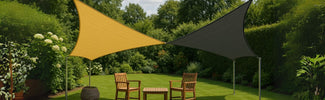
What is the difference between a sun sail and a shade sail?
, 4 min reading time
, 4 min reading time
When the sun is shining at its best, we all want to enjoy being outside without it becoming too hot or uncomfortable. That’s when choosing a fabric to create shade comes into play. The terms sun sail and shade sail often come up, but what exactly is the difference? In this article, we’ll explain it in detail. We’ll discuss the features, uses, materials, and benefits of both types of sails so that you can make an informed choice for your garden, terrace, or balcony. At Doika, you’ll find an extensive range of shade solutions that perfectly match your needs.
A sun sail is specifically designed to block direct sunlight and provide shade. It’s typically used to protect parts of the garden, terrace, or play area from harsh sunlight. Sun sails come in various shapes, such as triangular, square, or rectangular, and can be installed either permanently or temporarily.
A shade sail shares many similarities with a sun sail but focuses even more on creating a comfortable shaded area. Shade sails are often chosen for long-term installation and can offer protection from light rain, depending on the material. They also serve a decorative function and add ambiance to your garden.
Although the terms are often used interchangeably, there are clear differences:
| Feature | Sun Sail | Shade Sail |
|---|---|---|
| Primary purpose | Protection from sun | Creating shade and ambiance |
| Material | Lightweight, breathable | Thicker, sometimes water-repellent |
| Weather resistance | Wind permeable, no rain protection | Can offer light rain protection |
| Design | Functional | Functional and decorative |
The choice between a sun sail and a shade sail depends on how you plan to use it:
Both sun sails and shade sails are usually made from HDPE or polyester. HDPE is breathable and ideal for warm, windy locations. Polyester shade sails are often water-repellent and provide more protection against light rain. The lifespan of both types of sails depends on material quality and exposure to weather. With good maintenance, a high-quality sail can last 5 to 10 years.
Proper installation extends the sail’s lifespan and ensures optimal performance. Use strong mounting points like wall brackets or sturdy poles. Tension the sail tightly to prevent it from flapping in the wind. For maintenance, clean the sail regularly with lukewarm water and a soft brush. Avoid aggressive cleaning agents that could damage the material.
At Doika, we regularly receive positive feedback from customers who have enhanced their garden or terrace with a sun sail or shade sail. For example, Mrs. De Smet from Antwerp shares how her terrace has become a delightful, cool spot thanks to a sand-colored shade sail, where she can sit comfortably even on hot summer days. The Janssen family from Ghent chose a sun sail above their play area so their children can play safely outside without the risk of sunburn.
The difference between a sun sail and a shade sail lies mainly in the material, appearance, and functionality. If you want a simple solution against the sun, a sun sail is an excellent choice. If you’re looking for a stylish and durable shade solution that also repels light rain, a shade sail is the best option. Our experts are happy to help you choose the right solution for your outdoor space!


