
What is a privacy screen?
, 10 min reading time
, 10 min reading time
A privacy screen, also known as a privacy screen net, is a practical solution to reduce visibility and create more privacy in your garden, on your balcony, or along a fence. The screen is usually attached to a fence, wire panel, balcony railing, or construction barrier and ensures that your outdoor space feels more peaceful and sheltered.
In this article, you will learn what a privacy screen exactly is, what it is used for, what types are available, and what to look out for when you want to apply a privacy screen net in your situation.
A privacy screen is a fabric specifically designed to limit the view from outside. It is used as a shield in places where you want more privacy, protection, or visual calm. Think of an open garden, balcony, terrace, construction site, or temporary fencing.
A privacy screen usually does not completely seal off a space, but it does strongly reduce visibility. The degree of shielding depends on the density of the fabric. A privacy screen net of, for example, 95% blocks the majority of the view, while still allowing air and light to pass through.
A privacy screen is used in places where you want to reduce visibility, wind, or visual disturbance. It is a flexible solution because the screen can be quickly placed, removed, or replaced.
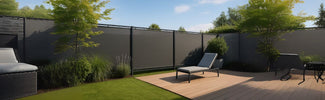
In the garden, a privacy screen is often attached to a fence or wire panel. This creates more privacy along the property boundary, near a seating area, or around a terrace.
On a balcony, a privacy screen helps against visibility from neighbours, passers-by, or surrounding buildings. In addition, the screen can also reduce light wind, making the balcony more comfortable.
At a terrace or veranda, a privacy screen can serve as a subtle shield. It makes the space more intimate without immediately having to install a permanent wall.
Privacy screens are also used at construction barriers, events, or temporary demarcations. They provide a neat appearance and limit the view of the space behind them.
A privacy screen net is particularly popular because it is simple, affordable, and versatile. No permanent construction needs to be installed, and yet more privacy can be created quickly.
| Type of privacy screen | Properties | Suitable for | Advantage |
|---|---|---|---|
| HDPE privacy screen | Lightweight, breathable, and UV-resistant | Garden, balcony, and fencing | Good balance between privacy and ventilation |
| Polyester privacy screen | Flexible, lightweight, and easy to handle | Visual finishing and temporary applications | Clean appearance and easy to install |
| PVC privacy screen | Heavier and denser in structure | Maximum shielding | Fully sight-proof and strongly wind-resistant |
For many private applications, an HDPE privacy screen net is a logical choice. This material is strong, relatively lightweight, and still allows sufficient air through, making it suitable for long-term outdoor use.
Not every privacy screen is the same. Quality is mainly determined by the density, material, finish, and the way the screen can be attached.
Even though a privacy screen is simple to use, the right choice depends on your situation. Pay particular attention to where you want to place the screen, how much privacy you want, and how much wind the screen needs to withstand.
Installing a privacy screen is usually straightforward and can be done without professional tools. It is important, however, that the screen is attached tightly and evenly.
A privacy screen net requires little maintenance. However, regular checks help extend its lifespan and prevent damage.
Most problems arise not from the screen itself, but from an incorrect choice or installation. These mistakes are easy to avoid.
When buying a privacy screen net, it is important to pay attention to density, dimensions, colour, and material. A higher density such as 95% offers more privacy, while the material determines how well the screen withstands wind and weather. Also choose a size that fits well with your fence and check whether the attachment is simple and secure.
The degree of privacy depends on the density of the fabric. A privacy screen net of 95% blocks the majority of the view, but still allows light and air through. If you want complete shielding, you can opt for a double layer or a fully solid material.
Yes, privacy screens are designed for outdoor use and can handle wind well, provided they are correctly and tightly installed. Materials such as HDPE partially allow air through, which reduces the pressure on the screen and makes it more resistant to wind load.
The best colour depends on your goal. Black privacy screens offer the most privacy and a sleek appearance, while green variants blend in better in a natural garden environment. Lighter colours look more spacious, but generally offer slightly less shielding.
A quality privacy screen net generally lasts several years. The lifespan depends on factors such as UV exposure, wind load, and installation. By attaching the screen securely and checking it regularly, you can significantly extend its lifespan.
Doika offers a carefully selected range of privacy screen nets for garden, balcony, terrace, and fencing. The products have been chosen based on durability, ease of use, and suitability for outdoor use. You benefit from clear product information, reliable service, a guarantee on your purchase, and support in choosing the right screen for your situation.
A privacy screen is a simple and effective way to limit visibility, create more privacy, and make your outdoor space more comfortable. By paying attention to density, material, dimensions, and installation, you choose a privacy screen net that suits your garden, balcony, or fence. Browse the range via privacy screen nets if you are looking for the right screen for your situation.


