
What Does a Compost Bin Do?
, 5 min reading time
, 5 min reading time
Composting is rapidly gaining popularity — and for good reason. More and more people want to live consciously, reduce waste, and enrich their gardens naturally. But how do you get started with composting? And what exactly does a compost bin do? In this blog, we dive into the world of compost bins: how they work, why they're a smart investment, and how you can get the most out of them. Whether you're a beginner gardener or a seasoned green enthusiast, this guide is your starting point for more sustainable gardening.
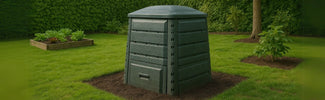
A compost bin is a specially designed container in which organic waste naturally breaks down into compost. It typically has a cylindrical shape, is made of durable plastic or wood, and features a lid and ventilation openings.
According to OVAM, on average, 40% of our household waste consists of organic material. Composting this not only saves on waste costs, but also contributes to a circular economy.
Compost is gold for your garden. It improves soil structure, increases humus content, and stimulates soil life. With a compost bin, you create high-quality fertilizer at no cost.
Waste that ends up in incinerators emits greenhouse gases. Composting locally significantly reduces this impact.
Composting in a bin relies on three basic elements: organic material, oxygen, and moisture.
What should you avoid?
| Feature | Compost Heap | Compost Bin |
|---|---|---|
| Location | Larger gardens | Small gardens or balconies |
| Appearance | Open and visible | Closed and tidy |
| Odor control | More difficult | Better |
| Temperature control | Limited | Efficient |
| Time savings | Slow | Faster composting process |
A compost bin is ideal for those who want fast results and a neat garden.
Mix the contents or rotate the bin (for rotating models) to provide oxygen. This greatly accelerates the composting process.
The contents should feel like a wrung-out sponge. Too dry? Add fresh green waste. Too wet? Add brown materials like paper or wood shavings.
This helps track progress. Ideal composting temperatures range between 40 and 60 °C.
The speed depends on the type of bin, temperature, waste types, and mixing frequency. On average:
Marie started composting in her city garden in 2023. She bought a compact 200-liter compost bin from Doika. After three months, she noticed not only less waste in her household trash but also healthier plants and reduced spending on potting soil. “I can’t live without it anymore,” she says.
Make sure to add enough dry material to prevent odors and poor aeration.
A non-aerated bin can lead to anaerobic decay and bad smells. Mix weekly.
A half-full bin remains too cool. Fill it at least two-thirds for effective results.
This attracts pests and can introduce harmful bacteria.
At Doika, you’ll find a wide selection of compost bins suited to your needs:
View all compost bins at Doika
Doika has been a trusted partner in sustainable garden products for years. Our compost bins are selected for quality, ease of use, and long-term durability. We offer:
We’re also happy to help with advice, installation tips, and maintenance instructions.
✔ Reduces household waste
✔ Provides free, natural fertilizer
✔ Improves your garden and plant health
✔ Easy to use
✔ Contributes to sustainability
Whether you want to reduce your environmental footprint, grow healthier plants, or simply produce less waste — a compost bin is the ideal investment for any garden lover.
Ready to make your garden greener and healthier? Explore our range of compost bins at Doika and choose the model that fits your needs. Have questions or need personal advice? Feel free to contact us — our team is here to help.


