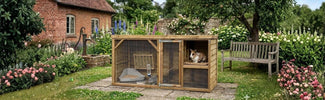
Wat kan ik het beste in een konijnenkooi doen?

What is the best thing to do in a rabbit cage?

, 12 min reading time

#VALUE!

Want to know what to put in a rabbit cage? A well-equipped rabbit cage is the foundation for a healthy and happy rabbit. From the right bedding to suitable food and plenty of toys — every choice affects the wellbeing of your pet. Whether you are just starting out as a rabbit owner or want to improve your current setup, this article provides concrete tips and practical advice. We cover everything that belongs in a rabbit cage: from bedding and food to enrichment and hiding spots. This way you can step by step create a safe and comfortable living environment for your rabbit — indoors and outdoors.

What is a rabbit cage?

A rabbit cage is the permanent living space of a rabbit, designed as a safe and comfortable environment. A good rabbit cage offers room to move, a shelter to rest and sufficient opportunities for enrichment and feeding. Rabbit cages are available in various designs: from compact indoor enclosures to large outdoor hutches with an adjacent run. The size and setup of the cage largely determine how comfortable a rabbit feels in its environment. What you put in a rabbit cage is therefore at least as important as the hutch itself.

Pros and cons: what works best in which type of rabbit cage?

Not every type of bedding, toy or furnishing is suitable for every type of cage. The setup that works best partly depends on the enclosure itself.

Cage type What works well inside What is less suitable Key consideration
Wooden outdoor hutch with run Thick layer of hay, wooden chew toys, tunnels, hay rack Paper bedding in the run (gets wet quickly in rain) Use a concrete board or rubber mat on the floor of the sleeping area
Metal indoor cage Paper bedding, lightweight toys, water bottle attached to the bars Heavy wooden elements, large tunnels Add a soft mat to cushion the hard floor
Large rabbit enclosure Multiple hay stations, grass mats, hiding spots, walkways Too many loose objects that restrict movement space Keep at least 2/3 of the floor free for movement
Small indoor cage Compact water bowl, small hay rack, one hiding spot Large tunnels or an excess of toys Always combine with daily free roaming time outside the cage

The right bedding for a rabbit cage

Good floor covering is essential for the comfort and health of your rabbit. Here are the most commonly used options at a glance.

  • Hay: Hay is the foundation of every rabbit cage. It provides comfort, contributes to a healthy digestive system and encourages natural grazing behaviour. Always lay a thick, fresh layer of hay on the floor.
  • Wood shavings: Untreated wood shavings without additives absorb moisture and odour effectively. They form a soft, hygienic surface and are widely available.
  • Paper bedding: An eco-friendly choice that absorbs well and is easy to replace. Choose a variant without harmful inks or chemical additives.

Healthy nutrition in the rabbit cage

Alongside the setup, nutrition plays a major role in the wellbeing of your rabbit. Always ensure a varied and balanced diet.

  • Hay: The basis of the rabbit diet. Offer unlimited fresh hay at all times — it is essential for healthy digestion and tooth wear.
  • Fresh vegetables: Provide a daily varied selection of leafy greens such as endive, lamb's lettuce and bell pepper. Avoid large quantities of high-sugar varieties.
  • Rabbit pellets: Choose high-quality pellets without added sugars or colourings. Limit the quantity — pellets are a supplement, not a main meal.
  • Clean water: Always provide fresh drinking water via a water bowl or bottle that is refreshed daily.

Toys and enrichment in the rabbit cage

Rabbits are social and curious animals that need mental stimulation. Enrichment in the rabbit cage prevents boredom and promotes natural behaviour.

  • Chew toys: Wooden blocks, willow branches or untreated twigs satisfy the natural gnawing need of rabbits and keep their teeth in good condition.
  • Hiding spots: Rabbits naturally seek out sheltered spaces. Tunnels, cardboard boxes or a hay bale give them the opportunity to retreat.
  • Rolling toys: Small balls, rattling toys or chew rings keep rabbits active and engaged.
  • Grass mat or foraging tray: Hide pieces of vegetables or herbs in a grass mat to stimulate foraging behaviour.

Step by step: how to set up a rabbit cage

  1. Choose the right location: Place the cage sheltered from direct sunlight, draughts and rain. For outdoors: choose a firm, level surface with shade on warm days.
  2. Lay down bedding: Cover the floor with a thick layer of hay or paper bedding. Add wood shavings to the toilet corner.
  3. Set up the sleeping area: Provide a dark, quiet sleeping spot with soft nesting material and a separate toilet corner.
  4. Add enrichment: Hang up chew toys, place tunnels and ensure variety. Rotate toys regularly.
  5. Set up food and water: Place hay in a hay rack, fill the water bowl with fresh water and prepare a portion of vegetables.
  6. Check safety: Check for sharp edges, splinters or openings where the rabbit could injure itself or escape through.
  7. Clean regularly: Replace the bedding at least twice a week and clean the cage thoroughly every week.

Top 3 rabbit hutches for outdoors

A good setup starts with a good enclosure. Here are three robust outdoor models that offer sufficient space for everything a rabbit needs.

Rabbit hutch Jop 243 x 95 x 124 cm

The rabbit hutch Jop is a handmade wooden outdoor enclosure with a spacious sleeping area and a covered run of 240 x 90 cm. Made from pressure-treated wood and delivered as a prefab assembly kit, built to last 10 to 15 years.

  • Luxury outdoor hutch suitable for two rabbits
  • Raised sleeping area with concrete board floor for moisture protection
  • Perspex window for daylight and visibility
  • Two access doors with sliding bolt

View model

Rabbit hutch Lyla 243 x 95 x 148 cm

The rabbit hutch Lyla combines a playful appearance with a fully covered run thanks to its pitched roof with roofing felt. Spacious enough for a rabbit toilet, toys and sufficient room to move for two rabbits.

  • Pitched roof with roofing felt for a dry run in all seasons
  • Spacious sleeping area with concrete board floor
  • Doors in both the run and sleeping area for easy access
  • Made from pressure-treated pine, lifespan 10–15 years

View model

Rabbit hutch Sanna 363 x 95 x 148 cm

The rabbit hutch Sanna offers more than 3 square metres of play and jumping space — ideal for owners who want to give their rabbits the best setup with enrichment, toys and multiple hay stations. The fully covered enclosure can remain outdoors all year round.

  • More than 3 m² of run and jumping space for two rabbits
  • Fully covered run with pitched roof and roofing felt
  • Spacious sleeping area with room for a rabbit toilet and sleeping zone
  • Made from pressure-treated pine with overlapping cladding boards

View model

What fits best in your rabbit cage?

When less setup is better: In a small cage, less is more. Too many toys or too much bedding restricts movement space. Always keep at least two thirds of the floor free for movement.

When extensive enrichment is overkill: For a rabbit that roams freely outside the cage for several hours a day, a hay rack, water bowl and one hiding spot are sufficient. Extensive enrichment is most useful when the cage is the primary living space.

Common mistakes when setting up a rabbit cage:

  • Offering too little hay — hay is not a luxury but a basic necessity
  • Not designating a toilet corner, causing the rabbit to go anywhere
  • Leaving bedding too long without replacing it
  • Providing too little enrichment, causing rabbits to become bored and stressed

User scenarios:

  • Two active rabbits outdoors: Combine a spacious outdoor hutch with multiple hay stations, a grass mat and chew toys for optimal enrichment.
  • One rabbit in a smaller space: Focus on the essentials — hay, a water bowl, one hiding spot and daily free roaming time outside the cage.
  • Beginners: Start simply with hay, paper bedding and one chew toy. Gradually expand the setup as you learn what your rabbit enjoys.

At Doika we offer tailored advice: we help you not only with choosing the right enclosure, but also with the ideal setup for your rabbits.

Frequently asked questions about what to put in a rabbit cage

What is the best bedding for a rabbit cage?

Hay is the most recommended bedding — it provides comfort and supports digestion. Untreated wood shavings or paper bedding are good additions for absorbing moisture and odour.

What toys are suitable for a rabbit cage?

Chew toys made from untreated wood, tunnels and grass mats are excellent choices. Rotate toys regularly to keep your rabbit active and curious.

How do you set up the sleeping area of a rabbit cage?

The sleeping area should be dark, quiet and dry with a soft layer of hay or nesting material on the floor. Set up a separate corner as a toilet zone and avoid strong smells or bright light.

How often should I clean the rabbit cage?

Replace the bedding in the toilet corner at least twice a week. A thorough cleaning of the entire cage is recommended weekly.

What must not be missing from a rabbit cage?

The absolute essentials are: unlimited fresh hay, clean drinking water, a hiding spot and sufficient room to move. Fresh vegetables, chew toys and a dedicated toilet corner complete the setup.

Why Doika?

Doika is a specialist provider of animal enclosures with an extensive range of rabbit cages for outdoors. All enclosures are handmade from high-quality materials and delivered as a prefab assembly kit, typically within 6 working days. Doika offers product guarantees, professional customer service and is happy to help you find the right enclosure and ideal setup for your rabbits.

Conclusion

A well-equipped rabbit cage is the foundation for a happy and healthy rabbit. With the right bedding, varied nutrition and sufficient enrichment you give your pet everything it needs. Looking for a quality outdoor enclosure that fits perfectly? Browse the full range in the rabbit cage collection at Doika.


Frequently Asked Questions

What is the best bedding material for a rabbit hutch?
Hay is the most recommended bedding material because it provides comfort and supports digestion. Untreated wood shavings or paper bedding are excellent additions for absorbing moisture and odors.
What toys are suitable for a rabbit hutch?
Chew toys made from untreated wood,tunnels,and grazing mats are excellent choices. Rotate the toys regularly to keep your rabbit active and curious.
How should you set up the sleeping area in a rabbit hutch?
The sleeping area should be dark,quiet,and dry,with a soft layer of hay or nesting material on the floor. Create a separate corner as a toilet area and avoid strong smells or bright light.
How often should I clean a rabbit hutch?
Replace the bedding in the toilet corner at least twice a week. A thorough cleaning of the entire hutch is recommended once a week.
What should not be missing in a rabbit hutch?
The essential basics are unlimited fresh hay,clean drinking water,a sheltered hiding place,and enough space to move around. Fresh vegetables,chew toys,and a dedicated toilet corner complete the setup.

Latest blogs

  • 9 Veelgemaakte Fouten Bij Het Kopen Van Bronzen Beelden (En Hoe Je Ze Voorkomt)

    9 Common Mistakes When Buying Bronze Statues in 2026 (And How to Avoid Them)

    Read more 

  • De grootste fouten bij plantenbakken en hoe je ze voorkomt (2026 gids)

    The Biggest Mistakes with Planters and How to Avoid Them (2026 Guide)

    Read more 

  • 10 veelgemaakte fouten bij houtopslag die je absoluut moet vermijden in 2026

    10 common firewood storage mistakes you absolutely must avoid in 2026

    Read more 

Previously viewed by you

Login

Forgot your password?

Don't have an account yet?
Create account