
Installing Water Features in the Garden: Complete Step-by-Step Guide 2026
, 8 min reading time
, 8 min reading time
Water features add calm, movement and character to any garden. Whether you choose a compact water ornament, a contemporary water table or a natural pond, water enhances the appearance of your outdoor space and increases comfort. Proper placement and maintenance are essential to ensure long-lasting enjoyment. By carefully considering the type, location and upkeep in advance, you can avoid common issues and make the most of your water feature. This guide explains the different types of water features, how installation works and what is required for correct use and maintenance, so your garden remains balanced throughout the year.
Water features are garden elements where water plays a central role, both decoratively and functionally. They range from closed systems with a circulating pump to open systems such as ponds. Their purpose is to add atmosphere, cooling and movement to outdoor spaces.
Not every water feature suits every garden. Available space, desired style and maintenance requirements all influence the right choice. Below is an overview of commonly used water features, including their function, benefits and typical applications. This helps determine which option best fits your garden and usage needs.
A water ornament is a compact, closed system in which water continuously circulates using an integrated pump. Because the water is reused rather than drained away, installation is straightforward and water consumption is limited. This type of water feature is ideal for small gardens, terraces and balconies where space is limited. Maintenance requirements are low, making water ornaments suitable for anyone looking to enjoy water in the garden with minimal effort.
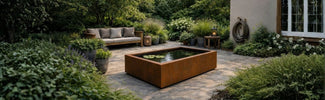
A water table features a calm, open water surface with a primarily visual function. The reflective surface creates a sense of space and tranquillity. Water tables are often used as central design elements and are particularly effective in modern or minimalist outdoor settings. They require minimal technical components but do need regular monitoring of the water level.
Water bowls are versatile water features that can be placed individually or grouped together. They are commonly used as subtle decorative accents on patios or among plants. In addition to their aesthetic value, water bowls provide drinking and bathing opportunities for birds and insects, supporting garden biodiversity. Maintenance mainly involves refreshing the water regularly.
A garden fountain combines visible water movement with an audible water sound, adding liveliness to the garden. The sound of flowing water can also help mask background noise and create a calming atmosphere. With a wide range of shapes, heights and styles available, garden fountains can suit both classic and contemporary gardens. Most operate with a pump and require regular maintenance to keep them functioning properly.
A pond creates a natural water habitat where aquatic plants and, in some cases, fish coexist. This type of water feature requires more space and careful planning, including appropriate depth and filtration. In return, a pond offers significant ecological value and attracts a wide range of wildlife. Visually, it often forms a peaceful focal point in the garden.
A waterfall introduces continuous water movement and a dynamic sound effect. Depending on the design, it can have a natural or modern appearance. Waterfalls are usually integrated with a pond or collection basin to form a closed water circulation system. Careful installation is essential to ensure a consistent and even flow.
The steps below apply to most pump-driven water features, including water ornaments, water tables and garden fountains. Following these steps carefully ensures safe installation and reliable long-term operation. Always review the specific product instructions before starting to avoid damage to the feature or pump.
| Type | Maintenance frequency | Main task | Complexity |
|---|---|---|---|
| Water ornament | Monthly | Clean pump | Low |
| Water table | Twice per month | Refresh water | Low |
| Water bowls | Weekly | Remove algae | Very low |
| Pond | Seasonal | Filter and plants | High |
A water feature should always be placed on a flat, stable surface with access to electricity if a pump is used. Avoid locations directly under trees to limit contamination from falling leaves. Proper placement ensures even water flow and long-term stability.
Most water features, such as water ornaments, fountains and water tables, use a pump to circulate water. Decorative water bowls without movement do not require a pump but need more frequent water changes. Always follow the manufacturer’s installation guidelines.
Use splash-proof outdoor sockets and ensure cables are safely routed and protected from moisture. The pump must be fully submerged before switching it on to prevent damage. For fixed installations, an additional safety switch is strongly recommended.
The maintenance frequency depends on the type of water feature and its surroundings. Small water ornaments and water tables typically require cleaning every few weeks, while ponds need seasonal maintenance. Regular cleaning prevents algae growth and extends pump lifespan.
During prolonged frost, switch off the pump and remove it if advised by the manufacturer. Lower the water level if necessary and empty or protect the water feature. Proper winter preparation helps prevent damage and prolongs service life.
Doika specialises in high-quality water features for gardens and terraces, combining practical expertise with a carefully curated product range. Years of experience ensure the use of suitable materials, pumps and designs for long-lasting outdoor use.
In addition to product quality, Doika offers clear service conditions, warranties on materials and pumps, reliable customer support and a transparent returns policy. This ensures you choose a solution that is not only visually appealing but also dependable over time.
Water features add calm, movement and atmosphere to gardens of any size. By selecting the right type and paying attention to installation and maintenance, they remain a valuable addition to your outdoor space for years. Whether you choose a water ornament, water table or pond, a well-placed water feature enhances the overall garden design. Explore the water features collection and discover the solution that best suits your garden.


