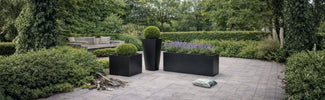
Plantenbakken kiezen, installeren en onderhouden in 2026

Choosing, Installing and Maintaining Planters in 2026

, 4 min reading time

Planters, planter boxes and outdoor pots have become an essential part of modern gardens, terraces and balconies. They not only add greenery, but also create structure, privacy and atmosphere. In practice, however, planters and pots are often chosen or placed incorrectly, leading to poor drainage, limited root growth or unnecessary maintenance. In this comprehensive guide, you’ll learn step by step how to choose the right planter or planter box, how to install and assemble it correctly, and how to use and maintain planters for long-term healthy plants. This way, your outdoor planters and outdoor pots stay attractive and functional for years to come.

What is a planter and when should you use planter boxes?

A planter (also known as a planter box or plant container) is a fixed container used for flowers, plants, ornamental grasses or small shrubs. Compared to individual outdoor pots, planters offer more volume, stability and a cleaner overall look. Planter boxes are often used for linear planting, separation or as a visual feature, while outdoor pots are more suitable for flexible and seasonal planting.

Step 1: Choosing the right planter

1) Choose the right material

  • Polyester planters: lightweight, sleek and colourfast. Ideal for balconies, roof terraces and modern outdoor spaces.
  • Aluminium planters: rust-free, low maintenance and modern. A strong choice for entrances and terraces.
  • Corten steel planters: robust and characterful, with a natural rust layer that protects the material.
  • Wooden planters: warm and natural in appearance. They require periodic maintenance but suit green gardens perfectly.

2) Determine the right size

  • 40–50 cm: suitable for compact planting and smaller outdoor spaces.
  • 60 cm or larger: more root space, better moisture retention and healthier plants.
  • Long planter boxes: ideal for privacy, borders and linear planting.

3) With base or without base?

  • Planters with a base: required on paving, concrete and roof terraces.
  • Planters without a base: only suitable when placed directly on natural ground.

Step 2: Installation, assembly, use and maintenance of planters

Installation

  1. Choose the final location before filling the planter.
  2. Ensure a level and stable surface.
  3. Check that rainwater can drain away properly.

Assembly

  1. Attach feet or spacers if required.
  2. Add a drainage layer of approximately 10 cm using clay pebbles or gravel.
  3. Cover the drainage layer with a permeable liner or fabric.

Use

  1. Fill the planter with an airy substrate suitable for the plants.
  2. Place the plant at the correct height.
  3. Water until excess water can drain away.

Maintenance

  1. Check soil moisture regularly.
  2. Remove dead plant material and inspect drainage openings.
  3. Clean planters periodically.
  4. Protect sensitive plants during frost.

FAQs about planters and outdoor pots

How deep should a planter be at minimum?

For most outdoor plants, a minimum depth of around 40 cm is recommended. Larger plants, shrubs and small trees benefit from 50–60 cm to support healthy root growth.

Do outdoor planters always need drainage holes?

Yes, proper drainage is essential for outdoor use to prevent water from collecting around the roots. Drainage holes combined with a drainage layer help prevent root rot.

Should I choose a planter with or without a base?

Planters with a base are necessary on paved surfaces, concrete and balconies. Planters without a base are only suitable when placed directly on soil.

Which materials are best for outdoor planters?

Wood provides a natural look but requires maintenance. Polyester is lightweight and colourfast, aluminium is very low maintenance and modern, and corten steel is robust with a warm appearance.

What are the most common mistakes when using outdoor planters?

Common mistakes include choosing a planter that is too small, skipping the drainage layer, using heavy garden soil and deciding on the location only after filling the planter.

Why Doika is a reliable choice

Doika focuses on outdoor planters designed for durability, reliable drainage and long-term performance in real outdoor conditions. Each product is selected with attention to material quality, stability and practical use.

You benefit from clear product information, practical guidance and transparent warranty and return policies, allowing you to choose with confidence.

Conclusion

The right planter makes the difference between plants that merely survive and plants that truly thrive. By choosing the right material, size and setup, and by maintaining planters correctly, you create a durable and low-maintenance outdoor space. Explore the full planters collection and find the perfect solution for your garden, terrace or balcony.


Frequently Asked Questions

How deep should an outdoor planter be at minimum?
For most outdoor plants,a minimum depth of around 40 cm is recommended. Larger plants,shrubs,and small trees benefit from 50–60 cm of depth for healthy root growth.
Do outdoor planters always need drainage holes?
Yes,proper drainage is essential for outdoor use to prevent water from collecting around the roots. A drainage layer combined with drainage holes helps avoid root rot.
Should I choose a planter with or without a base?
A planter with a base is required on tiles,concrete,and rooftops. A planter without a base is only suitable when placed directly on open ground,allowing roots to grow deeper and excess water to drain naturally.
Which materials are best for outdoor planters?
Wooden planters offer a natural look but require periodic maintenance. Polyester is lightweight and colourfast,aluminium is extremely low-maintenance and modern,and corten steel is durable with a warm appearance. The best choice depends on maintenance level,weight,and placement.
What are the most common mistakes when using planters outdoors?
Common mistakes include choosing a planter that is too small,skipping the drainage layer,using heavy garden soil,and deciding on placement only after filling the planter.

Latest blogs

  • Wat is de beste houtopslag in 2026?

    What is the best firewood storage in 2026?

    Read more 

  • Hoe houtopslag correct te regelen in 2026: Brandhout veilig en droog opslaan

    How to Set Up Wood Storage Correctly in 2026: Store Firewood Safely and Dry

    Read more 

  • Plantenbakken kiezen, installeren en onderhouden in 2026

    Choosing, Installing and Maintaining Planters in 2026

    Read more 

Previously viewed by you

Login

Forgot your password?

Don't have an account yet?
Create account